
A Tale of Two Housing Crises: Why Canada’s Real Estate Market Isn’t Actually Broken
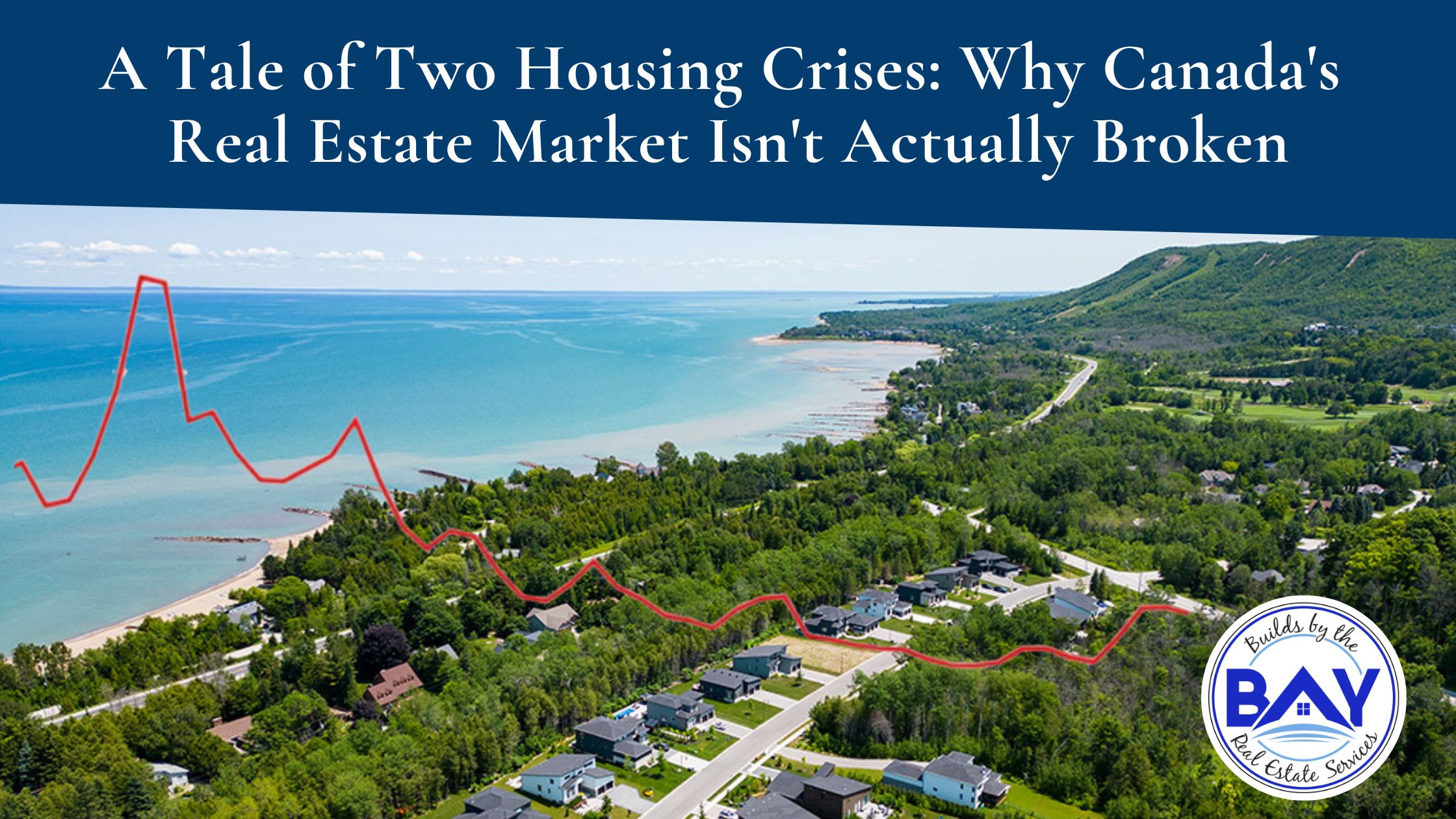 Spoiler alert: The sky isn’t falling – it’s just adjusting.
Dear reader, today I’d like to share a tale of two housing crises: why Canada’s real estate market isn’t actually broken because it was the best of times, it was the worst of times… and if you’re a Canadian homeowner or hopeful buyer, you’ve probably heard “housing crisis” so many times it’s lost all meaning. But here’s the plot twist: we’ve been here before, and we made it through just fine. Let me paint you a picture.
The Ghost of Housing Crisis Past
August 1981: You walk into your bank, excited to finally buy your first home. The average house price? A modest $72,000-$86,000. Sounds like a dream, right? Then your banker drops the bomb: your mortgage rate will be 21.75% for a 5-year fixed term. Yes, you read that correctly. Twenty-one point seven-five percent.
Fast forward forty years to September 2021, and we’re living in a bizarro world. Mortgage rates hit an eye-watering low of 0.88% for a 5-year variable. Money is practically free! The catch? The average house now costs $716,828. Cue the panic, the FOMO, the bidding wars, and yes, the cries of “housing crisis!”
Here We Are Today
August 2025: We’re sitting at roughly 4.5% for a 5-year fixed mortgage, with average house prices around $687,300.
Can we all just… take a breath? Here’s what the math actually tells us: Over 40 years, Canadian home values increased on average by 4-7% annually. That’s not a crisis – that’s a relatively stable, long-term investment doing exactly what real estate tends to do. But then 2021-2022 happened. Values shot up 30-70% in some markets. That was the real crisis… an unsustainable rocket ship fueled by:
- Absolute rock-bottom interest rates (thanks, pandemic stimulus!)
- Government money flooding the system
- The great COVID exodus from downtown condos to suburban subdivisions and rural retreats
- Remote work revolutionizing where we could live
- Supply chain nightmares making it impossible to build fast enough
It was a perfect storm of “buy now or be priced out forever” hysteria.
The Correction Nobody Wants to Talk About
Here’s the thing about rockets: they eventually come back down to earth. And that’s exactly what’s been happening since late 2022. We’re not in a crisis, we’re in a correction. And corrections take time. They’re uncomfortable, messy, and they make for dramatic headlines, but they’re also necessary and, dare I say, healthy.
The pieces are already moving:
✅ People are being called back to work, reducing demand for sprawling suburban dream homes
✅ Interest rates are coming down from their peaks
✅ The market is finding its footing after an unprecedented disruption
What Happens Next?
If the government plays its cards right, we could see real momentum building:
- Lifting the foreign buyer ban could inject much-needed demand and investment
- Supporting builders with smart policy could address our supply crunch
- Maintaining open immigration keeps our economy and housing market dynamic
Will things “start moving again”? Absolutely. But this time, hopefully, with a bit more sanity and a lot less panic.
The Bottom Line
The Canadian real estate market isn’t broken… it’s recalibrating after an extraordinary disruption. Whether you paid 21.75% in 1981 or 0.88% in 2021, you lived through your version of a “housing crisis.” And yet, here we all are. So let’s retire the crisis rhetoric and embrace a little perspective. The market will balance, opportunities will emerge, and life will go on. Because if there’s one thing 40 years of data teaches us, it’s that Canadian real estate has a funny way of working itself out- no matter how dramatic the headlines get. Now, who’s ready to stop doom-scrolling and start house-hunting? Contact us today to discuss your real estate goals.